In this guide
- Why Proper Solar Installation Matters
- Step 1: Review Your Electricity Usage
- Step 2: Solar Site Survey
- Step 3: Load Assessment and System Sizing
- Step 4: Choose Between On-Grid and Hybrid Solar
- Step 5: Select Solar Panels
- Step 6: Select the Right Solar Inverter
- Step 7: Determine Battery Requirements
- Step 8: Solar System Design
- Step 9: Mounting Structure Installation
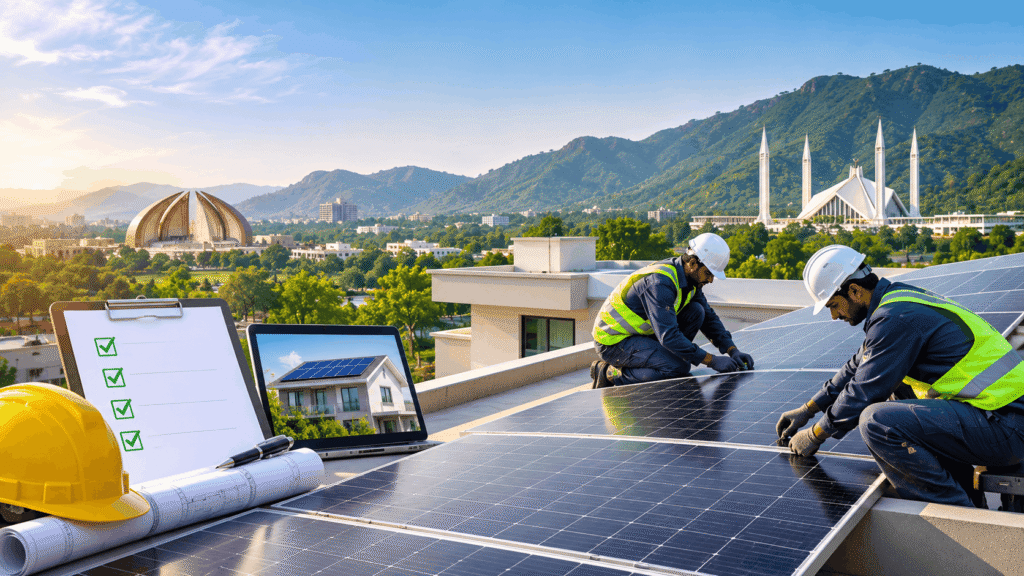
- Step 10: Solar Panel Installation
- Step 11: Inverter, Wiring and Protection Installation
- Step 12: System Testing and Commissioning
- Step 13: Grid Connection and Net Billing Approval (IESCO)
- Solar Installation for Homes in Rawalpindi & Islamabad
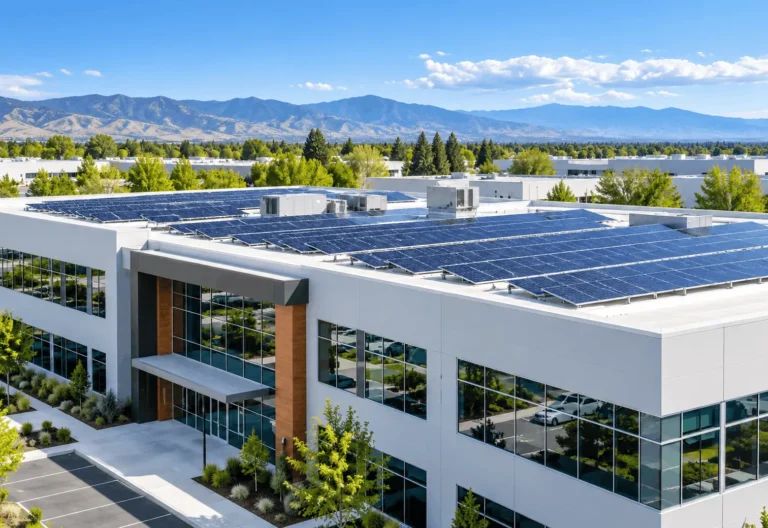
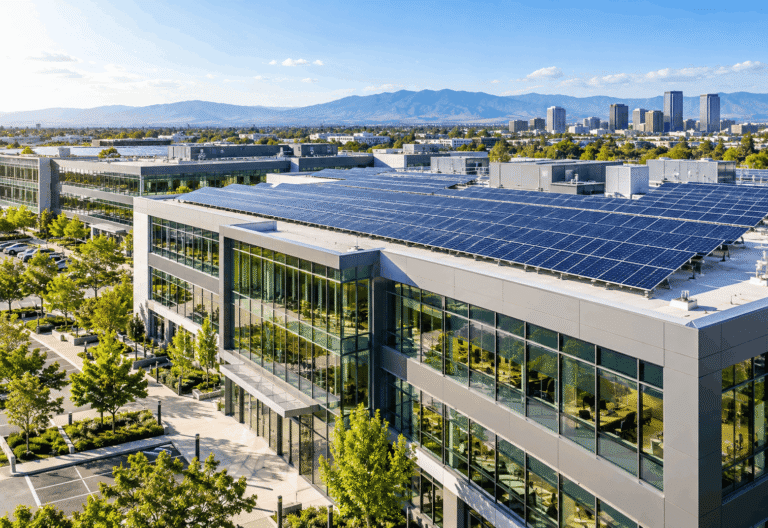
- Commercial Solar Installation
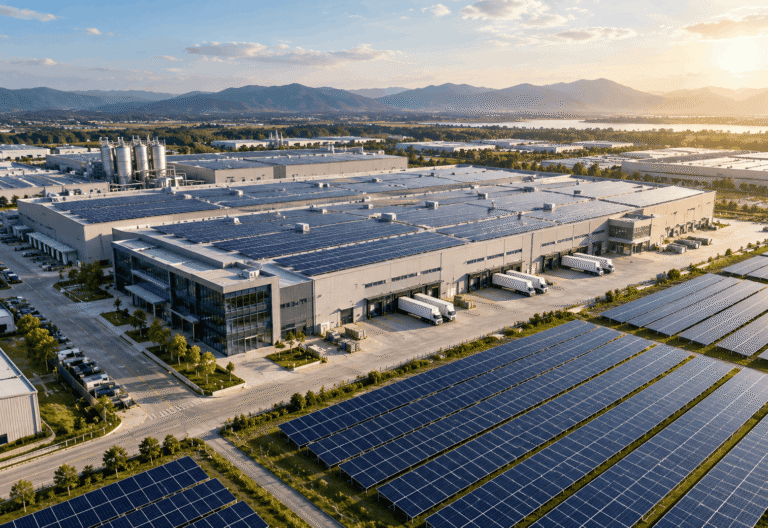
- Industrial Solar Installation
- How Much Does Solar Installation Cost?
- How to Choose a Solar Installation Company
- Solar Installation in Rawalpindi
- Solar Installation in Islamabad
- Frequently Asked Questions
- Get a Solar Installation Assessment
Last updated: 12 November 2026. Includes the 2026 net billing and IESCO grid connection steps.
Installing a solar system is more than placing panels on a rooftop. A reliable solar installation starts with understanding your electricity consumption, inspecting the property, selecting the right equipment, designing the system correctly, and completing installation and testing safely.
For homeowners and businesses in Rawalpindi and Islamabad, knowing the solar installation process before requesting a quotation can help you make a better decision and avoid choosing a system based only on price.
This guide explains the major steps involved in installing a solar system for a home, office, commercial property, or industrial facility.
Why Proper Solar Installation Matters
Even high-quality solar panels and inverters may not perform as expected if the system is poorly designed or installed.
A professional solar installation should consider:
- Electricity consumption
- Daytime and nighttime load
- Available rooftop or ground space
- Roof condition and structure
- Shading
- Panel orientation
- Inverter capacity
- Battery requirements
- Electrical protection
- Earthing and grounding
- Future energy requirements
The objective is not simply to install the maximum number of solar panels. The system should be designed around the property’s actual energy requirements.
Step 1: Review Your Electricity Usage
The first step is understanding how much electricity the property uses.
Recent electricity bills provide useful information about monthly consumption and help determine the approximate capacity of the solar system required.
For a detailed assessment, additional factors may also be considered, including:
- Peak electricity demand
- Daytime consumption
- Number of air conditioners
- Pumps and motors
- Office equipment
- Commercial machinery
- Nighttime electricity usage
- Expected future loads
A residential property and a commercial facility with similar monthly units may still require different system configurations because their usage patterns are different.
Step 2: Solar Site Survey
A site survey helps determine whether the available location is suitable for solar panel installation.
During the survey, the installation team can review the rooftop or ground area and identify factors that may affect system performance.
Important considerations include:
Available Installation Space
The available area determines how many solar panels can reasonably be installed.
Shading
Nearby buildings, trees, water tanks, walls, and other structures may cast shadows on the panels and affect solar generation.
Roof Condition
The rooftop should be assessed before installing mounting structures and solar panels.
Panel Orientation
Panel placement should be planned to achieve effective exposure to sunlight while considering site limitations.
Electrical Infrastructure
Existing distribution boards, wiring, connection type, and other electrical conditions should also be inspected.
A proper site survey reduces the risk of discovering major installation problems after equipment has already been selected.
Step 3: Load Assessment and System Sizing
Solar system capacity should be based on actual electricity requirements rather than guesswork.
Common system sizes may include:
- 3kW
- 5kW
- 6kW
- 8kW
- 10kW
- Larger commercial and industrial systems
However, the right system size varies from property to property.
For example, a 10kW system is not automatically the right choice simply because a customer has a large house. Electricity consumption, daytime usage and available installation area still need to be evaluated.
Step 4: Choose Between On-Grid and Hybrid Solar
One of the most important decisions is selecting the appropriate system type.
On-Grid Solar System
An on-grid solar system operates alongside the utility grid and is generally suitable for properties focused primarily on reducing grid electricity consumption during solar generation hours.
It normally does not include battery storage.
Hybrid Solar System
A hybrid solar system combines solar generation with battery storage and grid electricity.
It can be more suitable for customers who also require backup power during electricity outages.
The correct option depends on:
- Budget
- Electricity consumption
- Grid reliability
- Backup requirement
- Nighttime usage
- Battery capacity required
Customers should select the system based on their actual requirements rather than assuming that one technology is better for every property.
For a detailed comparison, read our guide: On-Grid vs Hybrid Solar System in Pakistan: Which One Is Right for You?
Step 5: Select Solar Panels
Solar panels are a major component of the system, but panel selection should not depend on wattage alone.
Factors to consider include:
- Panel efficiency
- Rated power
- Manufacturer
- Product warranty
- Performance warranty
- Available roof area
- Compatibility with the overall system design
Higher-wattage panels can help utilize available rooftop space efficiently, but the complete system must still be designed properly. You can browse the Tier-1 solar panels we supply from brands such as Canadian Solar, JA Solar, LONGi and Jinko.
Step 6: Select the Right Solar Inverter
The solar inverter converts the electricity generated by solar panels into electricity that can be used by the property’s electrical system.
Inverter selection depends on several factors, including:
- Solar system capacity
- On-grid or hybrid configuration
- Input voltage requirements
- Number of solar strings
- Battery compatibility
- Monitoring features
- Expansion requirements
- Warranty and technical support
An incorrectly sized inverter can affect overall system performance, which is why equipment selection should be part of the system design process. See our range of on-grid inverters and hybrid inverters.
Step 7: Determine Battery Requirements
Battery storage is primarily relevant for hybrid solar installations.
Before selecting a battery, determine which appliances or equipment need backup.
For example, essential residential loads may include:
- Lights
- Fans
- Internet equipment
- Refrigerators
- Selected appliances
Commercial users may need backup for:
- Computers
- Networking equipment
- Security systems
- Lighting
- Point-of-sale systems
- Other critical equipment
Battery capacity should be selected according to the required load and expected backup duration. Most modern hybrid systems use lithium solar batteries because of their longer cycle life and compact size.
Simply installing the largest battery available is not necessarily the most efficient solution.
Step 8: Solar System Design
Once the site requirements and electricity load are understood, the system layout can be prepared.
The design may determine:
- Number of solar panels
- Panel arrangement
- Mounting structure
- Inverter location
- Cable routes
- Electrical protection
- Battery location
- System capacity
Good system design helps ensure that all major components work together correctly.
Step 9: Mounting Structure Installation
The mounting structure supports the solar panels and keeps them securely positioned on the rooftop or installation area.
The structure should be installed according to site conditions and the planned panel layout.
Important factors include:
- Structural strength
- Proper fixing
- Panel spacing
- Accessibility
- Weather exposure
- Safe installation practices
The mounting system is a long-term part of the solar installation and should not be treated as a minor component.
Step 10: Solar Panel Installation
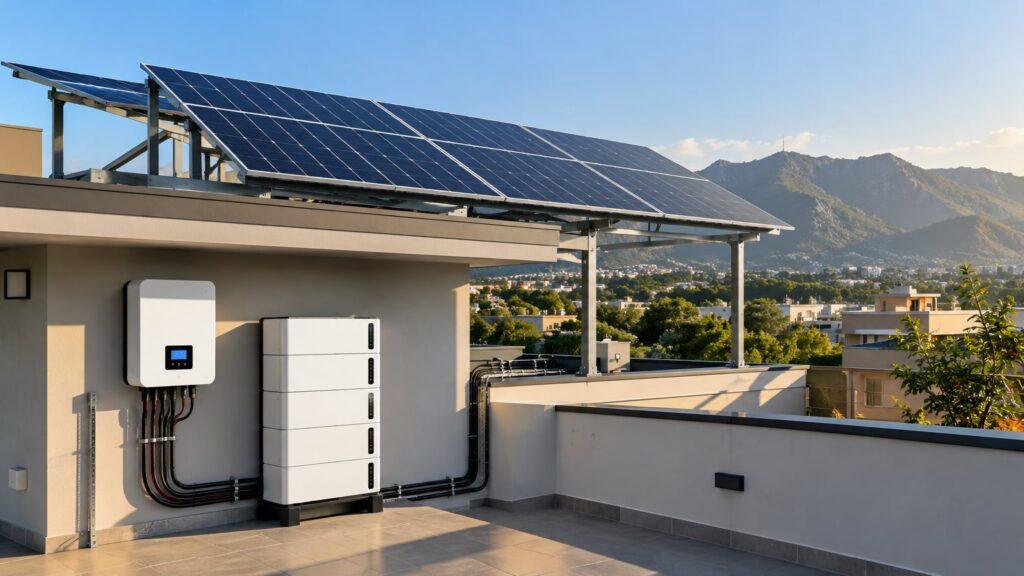
Once the mounting structure is ready, the solar panels are positioned and secured.
Panel installation should follow the approved layout so that available space is used efficiently and maintenance access is considered.
Panels are then electrically connected according to the system design.
Step 11: Inverter, Wiring and Protection Installation
The inverter is connected to the solar array and the property’s electrical system.
A professional installation should also consider appropriate electrical protection.
Depending on the system design, this can include:
- DC protection
- AC protection
- Isolation devices
- Surge protection
- Earthing and grounding
- Correct cable sizing
- Proper cable routing
Electrical safety should never be compromised simply to reduce installation cost.
Step 12: System Testing and Commissioning
Before the solar system is handed over, it should be tested.
Testing helps confirm that the major components are operating correctly and that the system is ready for use.
Checks can include:
- Solar generation
- Inverter operation
- Electrical connections
- Protection equipment
- Monitoring system
- Battery operation for hybrid systems
- System configuration
The customer should also be shown how to monitor the system and understand basic operating information.
Step 13: Grid Connection and Net Billing Approval (IESCO)
If you want to export surplus solar power to the grid, the system must be approved and connected by your distribution company. In Rawalpindi and Islamabad, this is IESCO.
The process generally includes:
- Submitting an application with the required documents, such as the latest electricity bill, CNIC, system details and equipment datasheets
- Site inspection by IESCO
- Installation of a bi-directional (green) meter
- Signing the agreement with the distribution company
Important 2026 update: Under NEPRA’s Prosumer Regulations 2026, new connections are moving from net metering to net billing. Exported units are credited at a lower rate, reported at around Rs 11 per unit, than the units you buy from the grid. That means it is more valuable to use your solar power yourself than to export it, which should be reflected in how the system is sized.
Approval timelines and document requirements can change, so Quantum Engineering confirms the latest IESCO and NEPRA requirements for each project and can assist with the paperwork.
Solar Installation for Homes in Rawalpindi & Islamabad
Residential solar systems should be designed according to household electricity consumption, available rooftop space, and backup requirements.
Homeowners commonly consider solar for:
- Reducing daytime grid electricity usage
- Managing increasing electricity costs
- Battery backup
- Running air conditioners
- Supporting essential household appliances
Both on-grid and hybrid solar configurations can be considered depending on the household’s requirements. Learn more about our domestic solar solutions.
Commercial Solar Installation
Businesses often use significant electricity during the daytime, making commercial properties suitable candidates for solar.
Commercial solar installations may be suitable for:
- Offices
- Retail outlets
- Schools
- Hospitals
- Hotels
- Restaurants
- Warehouses
- Corporate facilities
Commercial system design should take operating hours, peak demand and business continuity requirements into account. Explore our commercial solar solutions.
Industrial Solar Installation
Industrial facilities generally require more detailed engineering because of their larger electricity demand and electrical infrastructure.
Industrial solar projects may require assessment of:
- Historical consumption
- Peak load
- Machinery load
- Operating shifts
- Rooftop or ground space
- Electrical infrastructure
- Structural conditions
- Monitoring requirements
Factories and other large facilities should therefore use a project-specific solar design rather than relying on standard residential packages. See our industrial solar solutions.
How Much Does Solar Installation Cost?
The total cost of a solar system depends on several factors.
These include:
- System capacity
- Solar panel brand and wattage
- Inverter type
- Battery capacity
- Mounting structure
- Cabling
- Electrical protection
- Site conditions
- Installation requirements
Because equipment prices can change, customers should request an updated quotation based on their actual requirements rather than relying on outdated package prices found online.
How to Choose a Solar Installation Company
Price is important, but it should not be the only factor when comparing solar companies.
Before choosing an installer, consider:
Site Assessment
The company should understand the property before recommending a system.
Detailed System Proposal
The quotation should clearly identify major equipment and system capacity.
Relevant Project Experience
Ask to review previous residential, commercial or industrial projects. You can view our own completed solar projects.
Equipment Selection
The proposed panels, inverter and batteries should match the system requirements.
Installation Quality
Proper structure, wiring, electrical protection and testing are essential.
Technical Support
Find out what support is available after installation.
Choosing a system purely because it has the lowest quotation can result in compromises in equipment, system design or installation quality.
Solar Installation in Rawalpindi
Property owners searching for solar installation in Rawalpindi should consider local site conditions, electricity usage, system type, equipment selection and after-sales requirements before finalizing a project.
Quantum Engineering provides residential, commercial and industrial solar solutions in Rawalpindi, including site assessment, system design, equipment selection, installation, testing and technical support.
Customers can also explore our dedicated Solar Company in Rawalpindi page for more information about local solar services and projects.
Solar Installation in Islamabad
Solar requirements in Islamabad can also vary considerably between residential properties, commercial buildings and larger facilities.
The appropriate system should be selected based on load requirements, installation space, backup requirements and budget.
Quantum Engineering provides customized solar solutions for customers in Islamabad, including system assessment, design, installation and technical support.
Visit our Solar Company in Islamabad page to learn more about solar services available in the city.
Frequently Asked Questions
How do I start the solar installation process?
Start by reviewing recent electricity bills and arranging a site assessment. Your electricity consumption, installation space and backup requirements can then be used to recommend a suitable system.
What size solar system do I need?
The appropriate capacity depends on electricity consumption, peak load, daytime usage, roof space and future energy requirements. System size should be calculated rather than selected only from standard packages.
Is a site survey necessary before solar installation?
A site survey is recommended because it helps identify available space, shading, structural conditions and electrical requirements before the system is designed.
Should I choose an on-grid or hybrid solar system?
Choose based on your requirements. On-grid systems can be suitable when the primary objective is reducing daytime grid consumption, while hybrid systems are useful when battery backup is also required.
Can solar panels be installed on any rooftop?
Not every rooftop is equally suitable. Available space, shading, roof condition, orientation and structural considerations should be assessed first.
Do I need batteries with my solar system?
Not necessarily. Standard on-grid systems generally do not require batteries. Battery storage is typically considered when backup power is required.
How long does solar installation take?
The timeline varies according to system size, site conditions, engineering requirements, equipment availability and project complexity. A project-specific timeline should be provided after assessment.
Do I still get net metering in 2026?
New connections now fall under NEPRA’s net billing rules, where exported units are credited at a lower rate than imported units. Existing net-metering users are reported to keep their current arrangement until their agreements expire. We confirm the latest IESCO requirements for each project.
Do solar systems require maintenance?
Routine inspection, panel cleaning where required, monitoring and periodic technical checks can help maintain system performance.
Does Quantum Engineering provide solar installation in Rawalpindi and Islamabad?
Quantum Engineering provides residential, commercial and industrial solar solutions in Rawalpindi and Islamabad, including assessment, system design, installation, testing and technical support.
Get a Solar Installation Assessment
A successful solar project starts with the right system design.
Instead of choosing a system based only on advertised capacity or price, have your electricity consumption, property and backup requirements assessed first.
Quantum Engineering provides customized solar solutions for residential, commercial and industrial customers in Rawalpindi and Islamabad.
Send us your last electricity bill to book a free site assessment.
📞 Call / WhatsApp: +92 336 5564447 | +92 333 5937811
👉 Request a free solar assessment
Planning solar in Rawalpindi or Islamabad?
Send us your last 12 electricity bills and get a free system design, quote and payback estimate.