In this guide
Before buying solar, the most useful number to know is how many units (kWh) a solar system produces per day. It tells you how much of your bill solar can cover and which system size you need. This guide gives practical figures for Rawalpindi, Islamabad and most of Punjab.
How many units does 1kW of solar produce per day?
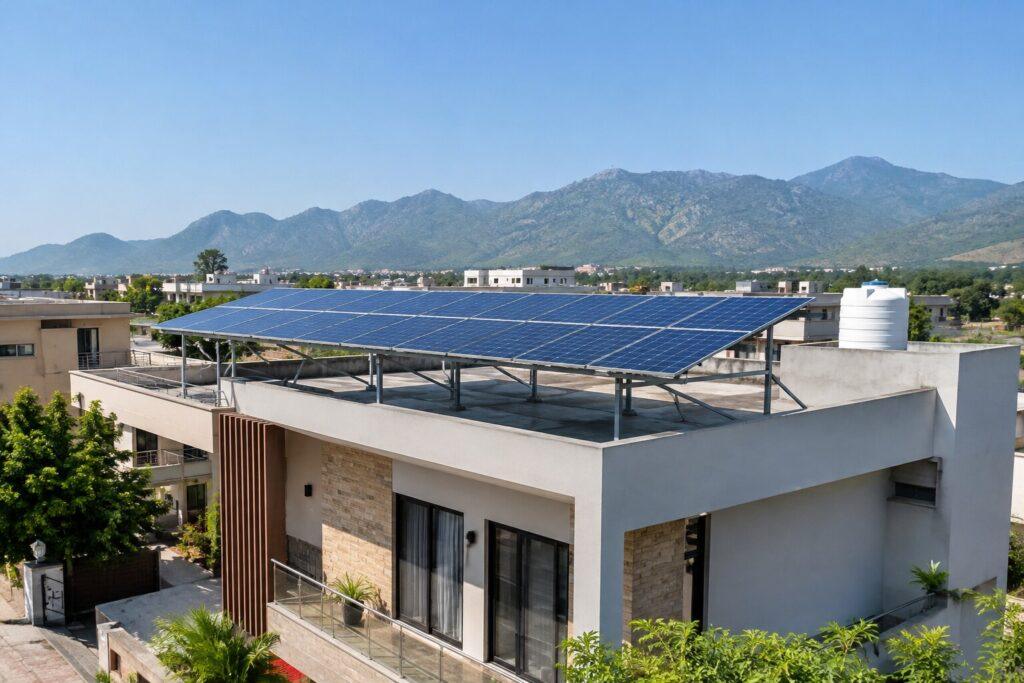
In Rawalpindi and Islamabad, 1kW of solar panels produces about 4 to 4.5 units a day on average, or roughly 120 to 135 units a month. Output changes through the year:
| Season | Units per kW per day |
|---|---|
| April to June (long, sunny days) | about 5 to 5.5 |
| July to September (monsoon clouds) | about 4 to 4.5 |
| October, November, February, March | about 4 to 4.5 |
| December and January (short days, fog, haze) | about 2.5 to 3.5 |
Units per day by system size
| System | Units per day (average) | Units per month (average) |
|---|---|---|
| 3kW | about 11 to 14 | about 320 to 400 |
| 5kW | about 18 to 22 | about 550 to 650 |
| 6kW | about 22 to 27 | about 650 to 800 |
| 10kW | about 38 to 45 | about 1,150 to 1,350 |
| 15kW | about 55 to 65 | about 1,700 to 2,000 |
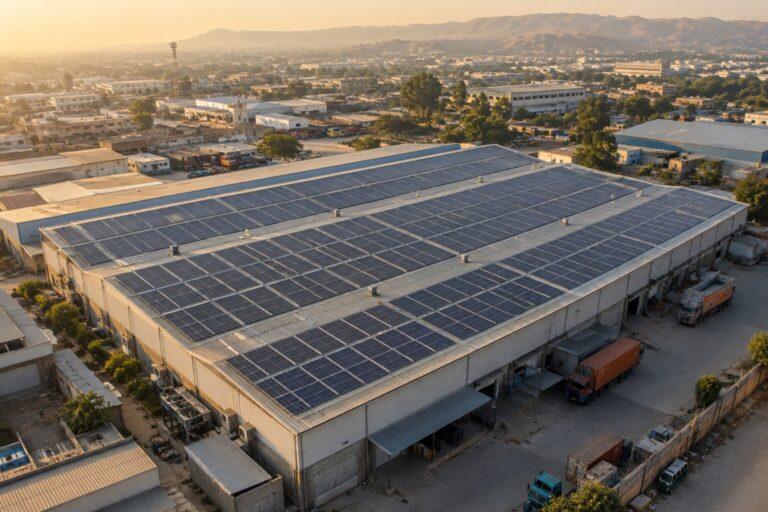
| 40kW (commercial) | about 150 to 180 | about 4,600 to 5,500 |
See prices for each size in the 3kW, 5kW and 10kW guides, the 33kW and 40kW commercial guide, and our solar system price list.
How many units does one solar panel produce?
| Panel | Units per day (average) |
|---|---|
| 410W (for example, Longi full black) | about 1.6 to 1.8 |
| 585W (for example, JA Solar 580W/585W) | about 2.3 to 2.6 |
| 700W to 725W (for example, 700 watt panels or Risen HJT) | about 2.8 to 3.2 |
A bigger panel produces more units simply because it has more watts; per watt, good tier-1 panels produce about the same. Read 585W vs 625W vs 725W and see today’s solar panel prices.
What reduces solar output?
- Shade: even partial shade from a water tank, wall or tree on one panel can pull down the output of a whole string.
- Dust: in dry months, dust can cut output noticeably. Clean panels every 2 to 4 weeks with plain water.
- Heat: panels lose some output on very hot days. N-type and HJT panels lose less than older P-type panels.
- Wrong angle or direction: panels facing south at roughly 25 to 30 degrees give the best yearly output in the twin cities.
- Inverter limits: an undersized inverter clips output at midday. Hybrid inverters such as the EPEVER Unicorn list the maximum panel power they accept.
How to calculate the system size you need
- Find your average monthly units from the last 12 bills (or the highest summer bill if you want full summer coverage).
- Divide by 30 to get units per day.
- Divide by 4.2 (average units per kW per day) to get the system size in kW.
Example: a bill of 600 units a month = 20 units a day; 20 / 4.2 = about 4.8kW, so a 5kW system is right. For a quick answer by house size, read solar system for a 10 marla house or solar for a 1.5 ton AC.
Frequently asked questions
How many units does a 5kW solar system produce per day in Pakistan?
About 18 to 22 units a day on average, or 550 to 650 units a month, in Rawalpindi and Islamabad. Summer days can reach 25 units or more; winter days can drop to 12 to 15.
How many units does a 10kW solar system produce per month?
About 1,150 to 1,350 units a month on average.
Does solar work on cloudy days?
Yes, but output drops, often to 20% to 50% of a sunny day depending on how thick the clouds are.
Does solar produce at night?
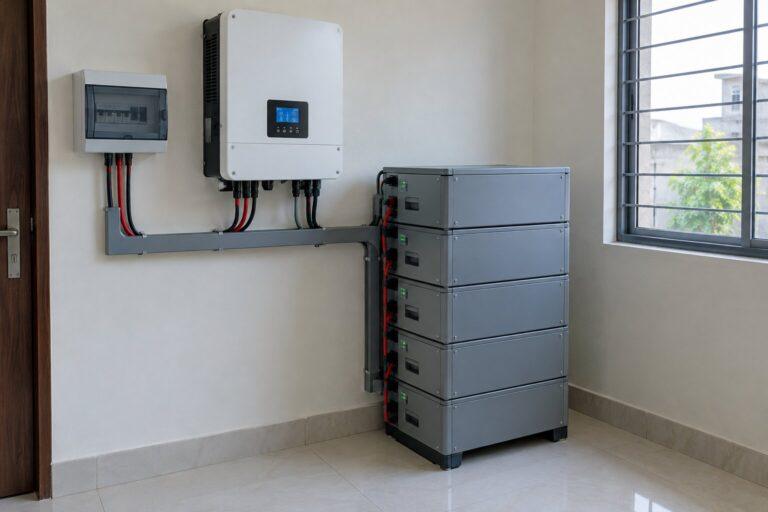
No. To use solar at night, you need a battery. Read lithium vs tubular battery and the Pylontech high-voltage battery guide.
Get an exact estimate for your roof
Send us your last 12 bills and a photo of your roof. Quantum Engineering will calculate your expected units and the right system size, free, across Rawalpindi and Islamabad. WhatsApp +92 336 5564447.
Planning solar in Rawalpindi or Islamabad?
Send us your last 12 electricity bills and get a free system design, quote and payback estimate.